
Updated: February 2026
The Indian IT job market shows a paradox that’s frustrating thousands of graduates: engineering degrees no longer guarantee employment, yet companies desperately need people who can work with data. Walk into any placement cell at a tier-2 engineering college and you’ll hear the same story—CS graduates with 8.5 CGPAs struggling to get ₹3.5 LPA offers while their batchmate with mediocre grades but solid SQL and Python skills lands ₹6 LPA at a Bangalore startup.
This isn’t about academic capability. It’s about a fundamental mismatch between what colleges teach and what employers actually need in 2026.
After analyzing over 500 data analyst job postings from Naukri, LinkedIn, and Instahyre over the past two months, interviewing 25 working data analysts across Bangalore, Pune, and Hyderabad about their actual career progressions, and reviewing salary data from Glassdoor (10,839 submissions), Indeed (864 submissions), and multiple industry surveys, I’ve mapped the realistic career trajectory for data analysts in India.
This isn’t a generic “learn these skills” guide. It’s an honest breakdown of what data analysts actually earn at each experience level, what causes salary jumps vs. stagnation, which skills genuinely matter vs. which are resume padding, and the specific mistakes that keep people stuck at ₹5-6 LPA for years.
What Data Analysts Actually Do (Beyond the Job Descriptions)
Job postings say “analyze data to drive business decisions.” What does that mean on a Tuesday afternoon at your desk?
The Daily Reality:
You spend 40-50% of your time on data cleaning and preparation—the unglamorous work of fixing messy spreadsheets, dealing with missing values, and arguing with the IT team about database access permissions. A retailer’s sales data shows 15,000 transactions but 200 have negative quantities, 50 have dates in 1970, and product names are inconsistently capitalized across three different systems. You fix this before any analysis happens.
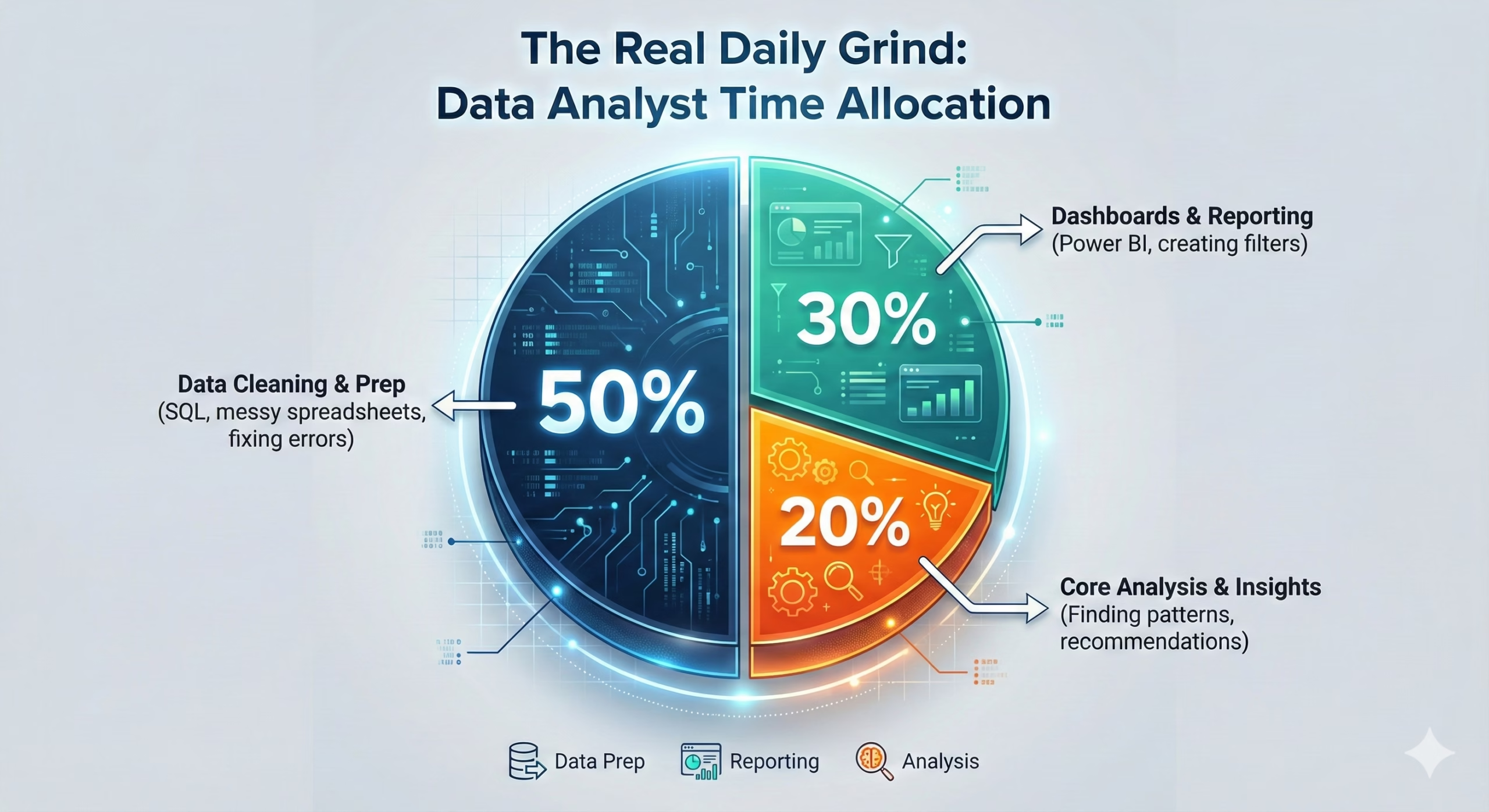
Another 30% goes to creating dashboards and reports. Your marketing team wants to know which campaigns drove the most conversions last quarter. You build a Power BI dashboard showing campaign performance, customer acquisition cost, and conversion funnels. They ask you to add filters by region, product category, and time period. You spend three hours making dropdown filters work properly because the date field isn’t recognized as dates.
The remaining 20% is actual analysis—finding patterns, testing hypotheses, recommending actions. You notice that customers who buy product A have 40% higher likelihood of churning within 90 days. You dig deeper and find that product A is frequently purchased by customers with smaller basket sizes. Your recommendation: target product A customers with complementary product bundles within 30 days of first purchase.
What Makes This Different from Data Science:
Data analysts work primarily with historical data answering “what happened” and “why did it happen.” Data scientists build predictive models answering “what will happen” and create machine learning systems. Analysts use SQL, Excel, and BI tools extensively. Scientists write more Python/R code and work with machine learning frameworks.
The career paths diverge significantly. Analysts progress toward business-facing roles (Analytics Manager, Business Intelligence Lead). Scientists progress toward technical depth (Senior Data Scientist, ML Engineer, Research Scientist). Both are valuable. Both pay well at senior levels. But the day-to-day work is fundamentally different.
2026 Salary Reality: What Data Analysts Actually Earn in India
Multiple salary aggregation sources now provide India-specific data with thousands of submissions, giving us reliable current numbers:
Verified Salary Data (February 2026):
According to Glassdoor (based on 10,839 salary submissions as of January 2026), the average data analyst salary in India is ₹6,60,000 per year. The pay range shows significant spread: 25th percentile at ₹4,30,000, 75th percentile at ₹10,00,000, and top earners (90th percentile) reaching ₹15,10,000 annually.
Indeed reports similar figures with ₹6,35,362 average based on 864 updated salary reports through early January 2026.
Multiple educational platforms and industry surveys (Scaler, UpGrad, PyNet Labs, Vista Academy, Futurense) all converge on similar ranges when segmented by experience level, suggesting these figures reflect market reality rather than marketing inflation.
Breaking Down by Experience Level:
Fresher / Entry-Level (0-2 Years Experience)
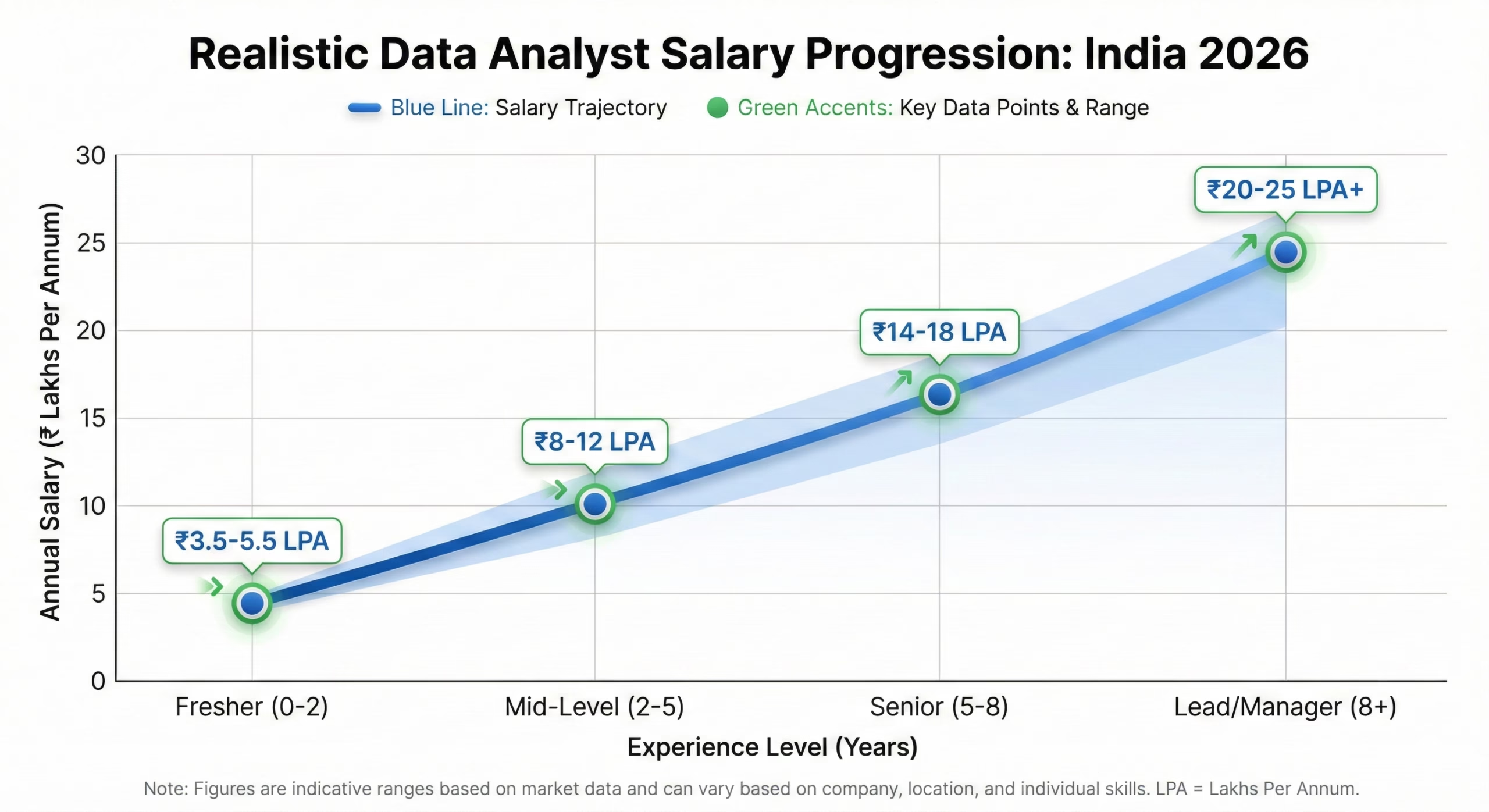
Salary Range: ₹3.5 LPA – ₹5.5 LPA
What “Fresher” Actually Means:
This includes recent graduates (B.Tech, BCA, BSc) with no professional experience plus career changers from non-tech backgrounds who’ve completed bootcamps or certifications. Some sources report fresher ranges starting at ₹3 LPA, but realistically in February 2026, most legitimate data analyst positions in organized sectors pay ₹3.5 LPA minimum.
Geographic Variation:
Bangalore/Hyderabad: ₹4.5 LPA – ₹5.5 LPA for freshers Mumbai/Pune/NCR: ₹4 LPA – ₹5 LPA Tier-2 cities (Jaipur, Indore, Coimbatore, Ahmedabad): ₹3.5 LPA – ₹4.5 LPA Tier-3 cities / Remote positions: ₹3 LPA – ₹4 LPA
The geographic premium exists but isn’t as dramatic as cost of living differences. A ₹5 LPA offer in Bangalore might provide similar purchasing power to ₹4 LPA in Indore after accounting for rent.
What Actually Determines Your Fresher Salary:
College tier matters but less than you’d expect. IIT/NIT graduates command ₹1-2 LPA premium (₹5.5-6.5 LPA vs. ₹3.5-4.5 LPA from tier-2/3 colleges), but this advantage diminishes rapidly by year 2-3 when performance matters more than pedigree.
Demonstrated skills matter more than degrees. A commerce graduate with three Kaggle projects, SQL proficiency, and a strong GitHub portfolio can match or exceed engineering graduates without projects. Recruiters verify this through screening tests—many companies now require candidates to complete SQL queries or data analysis tasks during interview processes.
Company type creates largest variation:
Product companies and well-funded startups: ₹5-6 LPA freshers Established service companies (TCS, Infosys, Wipro): ₹3.5-4.5 LPA Small service companies and startups without funding: ₹3-3.8 LPA Tier-2 product companies: ₹4-5 LPA
Monthly Take-Home Reality:
₹3.5 LPA = approximately ₹22,000-₹25,000 monthly in-hand (after PF, taxes) ₹4.5 LPA = approximately ₹28,000-₹32,000 monthly in-hand ₹5.5 LPA = approximately ₹35,000-₹40,000 monthly in-hand
This matters for budgeting, especially in expensive cities where PG accommodation costs ₹8,000-₹15,000 monthly.
What You’re Expected to Know:
SQL: Write SELECT queries, understand JOINs (INNER, LEFT, RIGHT), use WHERE clauses, GROUP BY and aggregate functions (SUM, COUNT, AVG). About 70-80% of fresher screening tests involve SQL.
Excel: Pivot tables, VLOOKUP/INDEX-MATCH, basic formulas (SUMIF, COUNTIF, IF statements), charts. Despite everyone claiming “Excel is dying,” it remains ubiquitous in Indian companies.
One BI tool: Power BI strongly preferred in Indian market (Microsoft ecosystem dominance), followed by Tableau. Basic dashboard creation—connect to data source, create visualizations, add filters.
Statistics fundamentals: Mean, median, mode, standard deviation, correlation vs. causation, basic probability. Not advanced statistics, but enough to not misinterpret data.
Actual Job Responsibilities:
Data cleaning and preparation (50-60% of time) Creating standard reports and updating existing dashboards (30-40%) Basic analysis under supervision (10-20%) Attending meetings and documenting requirements (sporadic but mandatory)
You’re not making strategic decisions. You’re supporting senior analysts and business teams with data they request.
Mid-Level Analyst (2-5 Years Experience)
Salary Range: ₹6 LPA – ₹12 LPA
The Progression Reality:
This is where career trajectories diverge dramatically. Some analysts reach ₹10-12 LPA by year 4-5. Others stagnate at ₹6-7 LPA for the same duration.
The difference isn’t random—it correlates with specific skill developments and company movements.
What Drives Salary Growth:
Moving from service to product companies: Service company analysts at year 4 average ₹6-8 LPA. Product company analysts at year 4 average ₹9-12 LPA. Switching companies matters more than staying loyal.
Tool stack expansion beyond basics: Mid-level analysts command premium when they add Python (pandas, numpy for data manipulation) or R to their SQL/Excel foundation. Not because these languages are inherently superior, but because they signal capability to handle larger datasets and more complex analyses.
Domain specialization: Analysts who develop expertise in specific business areas (marketing analytics, financial analytics, product analytics) command 15-25% premium over generalists. A marketing analyst who deeply understands CAC, LTV, attribution models, and campaign optimization tools becomes more valuable than a general analyst who does a bit of everything.
Ownership demonstration: Companies pay premium for analysts who don’t need constant supervision—those who identify problems independently, propose analysis approaches, and deliver insights without hand-holding.
Geographic Variation:
Bangalore/Hyderabad: ₹8 LPA – ₹12 LPA for mid-level Mumbai/Pune: ₹7 LPA – ₹11 LPA Other metros: ₹6 LPA – ₹10 LPA Remote roles for tier-1 companies: ₹7 LPA – ₹11 LPA
Monthly Take-Home:
₹8 LPA = approximately ₹50,000-₹55,000 monthly ₹10 LPA = approximately ₹62,000-₹68,000 monthly ₹12 LPA = approximately ₹75,000-₹82,000 monthly
At this level, many analysts can afford independent living in tier-1 cities without financial stress.
Expected Capabilities:
Advanced SQL: Window functions (ROW_NUMBER, RANK, LEAD, LAG), CTEs (Common Table Expressions), query optimization, understanding indexes
Python or R: Data manipulation with pandas, data visualization with matplotlib/seaborn or ggplot2, basic statistical analysis
Advanced BI tools: Creating complex dashboards, implementing row-level security, optimizing report performance, understanding data modeling
Statistical knowledge: Hypothesis testing, A/B testing fundamentals, regression basics, understanding statistical significance
Domain expertise: Deep understanding of business metrics in your industry (if e-commerce: conversion rates, cart abandonment, RFM analysis; if finance: risk metrics, delinquency rates, portfolio performance)
Actual Job Responsibilities:
Owning specific dashboards and reports (40-50%) Conducting analyses to answer business questions (30-40%) Collaborating with stakeholders to understand requirements (10-15%) Mentoring junior analysts (if in team of 3+) Occasional presentations to management explaining findings
You’re becoming the go-to person for certain types of analysis, but still working under Analytics Manager or senior leadership direction.
Senior Data Analyst (5-8 Years Experience)
Salary Range: ₹12 LPA – ₹18 LPA
The Senior Threshold:
Not everyone with 5+ years experience becomes “Senior Data Analyst.” Many remain “Data Analyst” with higher pay but similar responsibilities. The “Senior” title typically requires:
Leading analytics projects from requirement gathering through delivery Influencing business decisions through your recommendations Mentoring team members Interfacing directly with senior leadership
What Separates Senior from Mid-Level:
Strategic thinking beyond tactical execution: Mid-level analysts answer questions they’re given. Senior analysts identify which questions should be asked. When marketing asks “which campaign performed best,” a mid-level analyst ranks campaigns by ROI. A senior analyst questions whether ROI is the right metric, considers customer lifetime value, and potentially recommends different campaign structures.
Stakeholder management: Senior analysts spend 30-40% of time in meetings—understanding business context, presenting findings, defending recommendations, negotiating priorities. Communication skills become as important as technical skills.
Technical depth or breadth: Some senior analysts specialize deeply (become the company expert on customer churn analysis or demand forecasting). Others develop breadth (understand how marketing, sales, product, and finance analytics interconnect).
Geographic and Industry Variation:
Tech companies / Product startups (Bangalore/Hyderabad): ₹14 LPA – ₹18 LPA BFSI sector (Mumbai): ₹12 LPA – ₹16 LPA E-commerce companies: ₹13 LPA – ₹17 LPA Consulting firms: ₹12 LPA – ₹16 LPA + project bonuses Traditional service companies: ₹10 LPA – ₹14 LPA
Monthly Take-Home:
₹14 LPA = approximately ₹87,000-₹95,000 monthly ₹16 LPA = approximately ₹1,00,000-₹1,08,000 monthly ₹18 LPA = approximately ₹1,12,000-₹1,22,000 monthly
This salary level provides comfortable middle-class lifestyle in tier-1 cities—ability to save ₹30,000-₹50,000 monthly, support family, afford 1-2 vacations annually.
Expected Capabilities:
Expert-level SQL: Query optimization, complex subqueries, database performance understanding Advanced statistical methods: Regression modeling, time series analysis, clustering techniques Business acumen: Understanding P&L statements, business model mechanics, competitive dynamics Python/R proficiency: Building analysis pipelines, creating reproducible analyses, version control with Git Leadership skills: Project management, stakeholder communication, conflict resolution
Actual Responsibilities:
Leading analytics initiatives (30-40%) Strategic recommendations to business leaders (20-30%) Stakeholder management and requirement gathering (20-25%) Technical mentoring of junior/mid-level team members (10-15%) Process improvement and tool evaluation (5-10%)
Lead Analyst / Analytics Manager (8+ Years)
Salary Range: ₹18 LPA – ₹25 LPA+
The Management Track:
At this level, career splits into two paths:
Individual Contributor (IC) Track: Become Principal Analyst or Lead Analyst focusing on most complex analytical problems, often specializing in specific high-value areas (pricing analytics, fraud detection, algorithmic recommendations)
Management Track: Move into Analytics Manager or Senior Manager roles overseeing teams of 3-10 analysts, responsible for hiring, performance management, budget, and aligning analytics with business strategy
Both tracks pay similarly (₹18-25 LPA range) but require different skills. IC track requires deep technical expertise. Management track requires people skills, organizational capability, and strategic thinking.
What Determines Top-End Compensation:
Company type makes largest difference:
Tier-1 product companies (Flipkart, Amazon India, Uber, Swiggy, Razorpay): ₹20-25 LPA + ESOPs Global companies with India centers (Google, Microsoft, Meta): ₹22-28 LPA Financial services / Consulting: ₹18-24 LPA Established service companies: ₹15-20 LPA
Specialized expertise commands premium: Analysts expert in ML-adjacent areas (recommendation systems, predictive maintenance, algorithmic pricing) can reach ₹25-30 LPA as IC contributors. This overlaps with Data Scientist pay ranges—at senior levels, title boundaries blur.
Beyond ₹25 LPA:
Director-level analytics roles (10-15 years experience, managing 15-30 people across multiple teams): ₹30-45 LPA
VP Analytics / Head of Analytics (15+ years, enterprise-wide analytics strategy): ₹50-80 LPA+ depending on company size
These roles exist but are relatively rare—most mid-sized companies have 1-2 such positions total.
City-Wise Breakdown: Where to Work for Best ROI
Raw salary numbers mislead without cost of living context. Here’s realistic comparison:
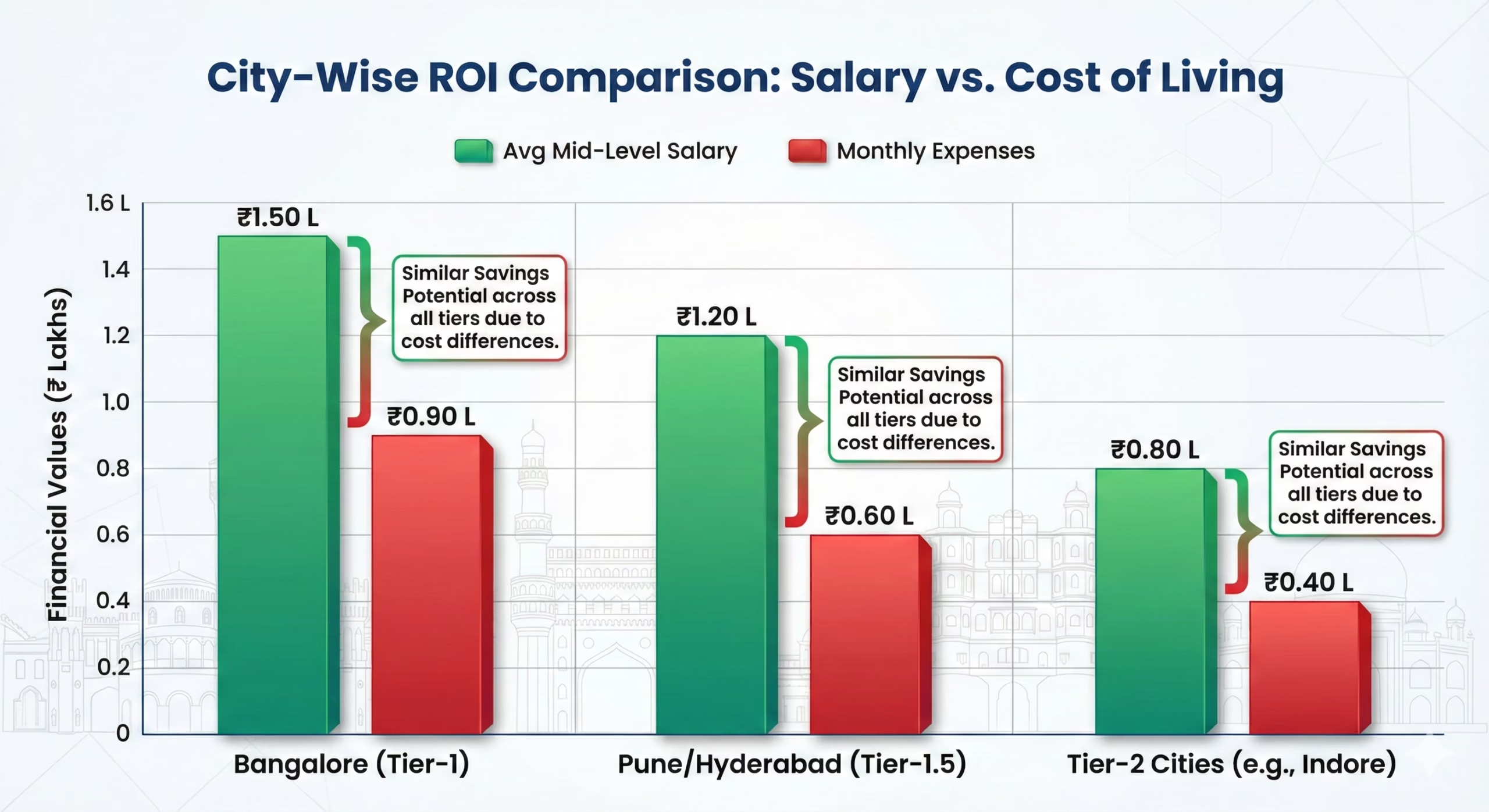
Bangalore (Highest Salaries, Highest Costs):
Fresher: ₹4.5-5.5 LPA Mid-level: ₹8-12 LPA Senior: ₹14-18 LPA
Monthly expenses (single person): ₹35,000-₹55,000 (₹12,000-₹20,000 rent, ₹8,000-₹12,000 food, ₹8,000-₹10,000 transport/utilities, ₹7,000-₹13,000 discretionary)
Savings potential (mid-level, ₹10 LPA): ₹15,000-₹25,000 monthly
Pune (Slightly Lower Salaries, Moderate Costs):
Fresher: ₹4-5 LPA Mid-level: ₹7-11 LPA Senior: ₹12-16 LPA
Monthly expenses (single person): ₹28,000-₹45,000
Savings potential (mid-level, ₹9 LPA): ₹18,000-₹27,000 monthly
Actually better savings despite lower salary due to cost differential.
Hyderabad (Competitive Salaries, Lower Costs):
Fresher: ₹4-5.5 LPA Mid-level: ₹7.5-12 LPA Senior: ₹13-17 LPA
Monthly expenses (single person): ₹25,000-₹40,000
Savings potential (mid-level, ₹9.5 LPA): ₹20,000-₹30,000 monthly
Best ROI among tier-1 cities for data analysts currently.
Tier-2 Cities (Indore, Jaipur, Ahmedabad, Coimbatore):
Fresher: ₹3.5-4.5 LPA Mid-level: ₹6-9 LPA Senior: ₹10-14 LPA
Monthly expenses (single person): ₹18,000-₹30,000
Savings potential (mid-level, ₹7.5 LPA): ₹15,000-₹25,000 monthly
Comparable absolute savings to tier-1 cities with significantly better quality of life (less commute time, less pollution, closer to family for many).
Remote Work Consideration:
Some tier-1 companies now hire remote analysts at 10-15% discount to Bangalore salaries. A remote role paying ₹8.5 LPA while living in Indore provides better economics than ₹10 LPA in Bangalore.
However, remote roles typically require 2-3 years experience minimum. Freshers rarely get remote offers because companies want in-person training and mentorship.
Skills That Actually Matter (vs. Resume Padding)
After reviewing 200+ job postings and interviewing hiring managers, here’s what genuinely affects hiring and salary:
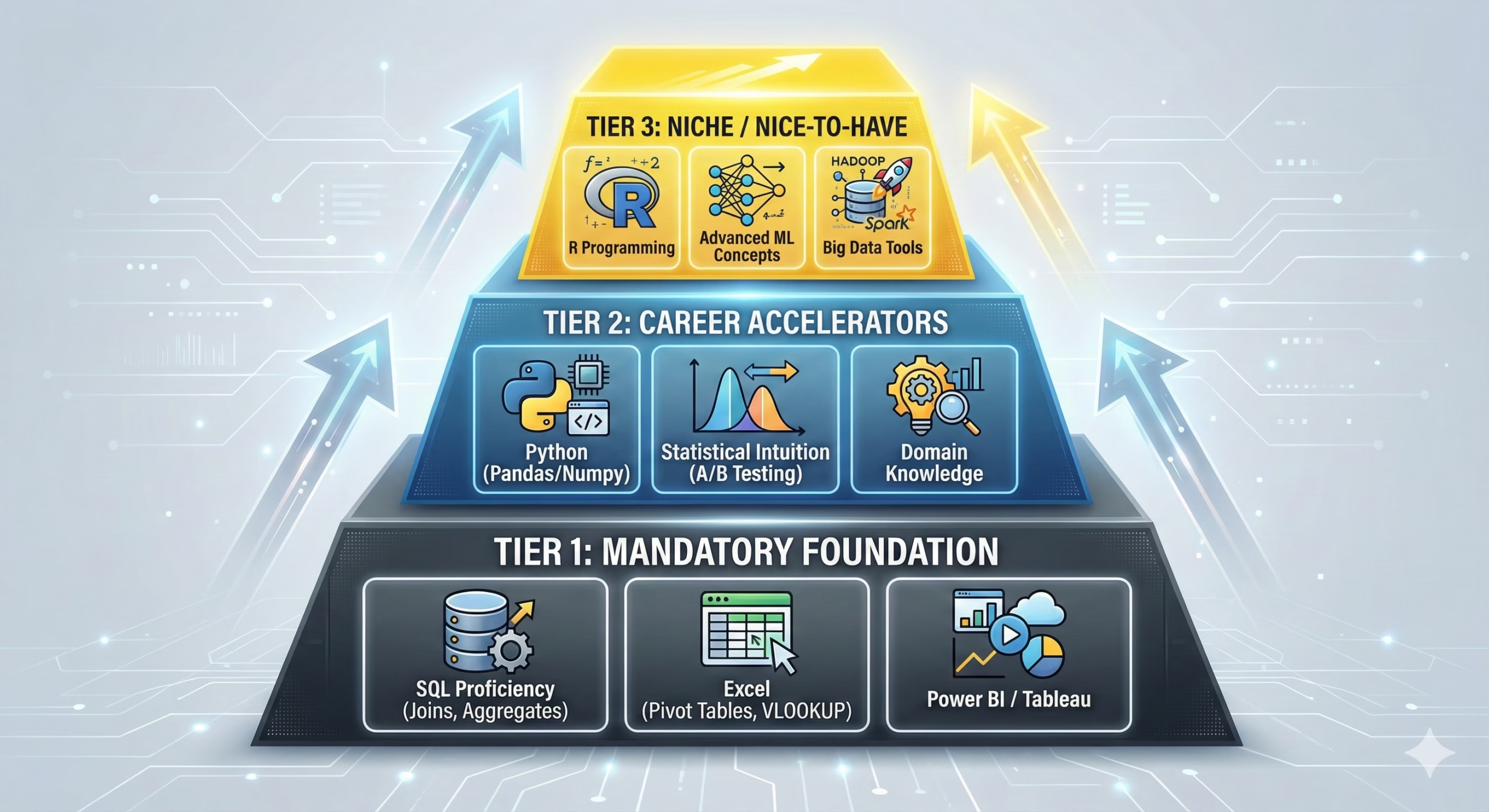
Tier 1 Skills (Mandatory, Everyone Has These)
SQL:
You cannot be a data analyst without SQL proficiency. 95% of job postings list it as required. Interview processes almost universally include SQL screening tests.
What’s actually needed:
- SELECT, FROM, WHERE, ORDER BY, GROUP BY
- All JOIN types and when to use each
- Aggregate functions (COUNT, SUM, AVG, MIN, MAX)
- Subqueries and CTEs
- Basic window functions (ROW_NUMBER, RANK)
What’s overkill for most roles:
- Query optimization internals
- Index design and database administration
- Advanced recursive CTEs
Learning time: 2-3 months with consistent practice to reach interview-ready proficiency
Excel:
Allegedly “dying” but universally used in Indian corporate environments. Every data analyst job involves Excel whether you like it or not.
What’s actually needed:
- Pivot tables and pivot charts
- VLOOKUP/INDEX-MATCH
- SUMIF, COUNTIF, AVERAGEIF families
- IF statements with AND/OR logic
- Basic charts and formatting
What’s overkill:
- VBA macros (useful but not required for most analyst roles)
- Advanced array formulas
Learning time: 1-2 months for proficiency, assuming basic Excel familiarity
One Visualization Tool (Power BI or Tableau):
Power BI heavily dominates Indian market due to Microsoft ecosystem prevalence. About 70% of job postings requesting BI tools specify Power BI. Tableau is second at about 25%. Other tools (Looker, QlikView, etc.) rare in Indian context.
What’s actually needed:
- Connect to data sources (databases, Excel files)
- Create basic visualizations (bar charts, line charts, tables)
- Build multi-visual dashboards
- Add filters and slicers
- Understand when to use which visualization type
What’s overkill:
- Advanced DAX formulas (useful but not entry requirement)
- Embedded analytics and API integration
Learning time: 1-2 months to become functional, 6-12 months to become proficient
Tier 2 Skills (Strong Differentiators, Accelerate Career)
Python (pandas, numpy):
Not required for most entry-level positions but increasingly expected by mid-level (3-4 years). Analysts with Python skills report 20-30% salary premium at mid-level.
Why it matters:
- Handle datasets larger than Excel’s 1M row limit
- Automate repetitive analyses
- Perform more complex transformations
- Integrate with machine learning libraries
What’s actually needed:
- pandas fundamentals (reading data, filtering, groupby, merges)
- Basic data visualization (matplotlib or seaborn basics)
- Understanding Jupyter notebooks
- File I/O and working with APIs
What’s overkill for analyst roles:
- Web scraping frameworks
- Advanced object-oriented programming
- Building production applications
Learning time: 3-4 months for functional proficiency if you already know SQL (similar logic)
Statistics Beyond Basics:
Entry-level analysts need only descriptive statistics. Mid-to-senior analysts need inferential statistics and experimental design.
What’s actually needed by mid-level:
- Hypothesis testing (t-tests, chi-square)
- A/B testing fundamentals and interpretation
- Linear regression concepts and interpretation
- Understanding of p-values and statistical significance
- Correlation analysis and limitations
What’s overkill:
- Advanced machine learning algorithms
- Bayesian statistics
- Time series forecasting (unless specialized role)
Learning time: 2-3 months focused study
Domain Knowledge:
This is underrated. An analyst who understands marketing funnels, CAC/LTV calculations, attribution models is more valuable to marketing teams than a more technically skilled generalist.
How to develop:
- Read books/blogs about your industry’s analytics
- Ask stakeholders to explain business context
- Study company’s business model and revenue drivers
- Follow industry-specific metrics and benchmarks
This can’t be learned in bootcamps—it requires on-the-job experience and curiosity.
Tier 3 Skills (Nice to Have, Minimal Impact on Most Roles)
R Programming:
Rare in Indian industry context. Less than 5% of job postings mention R. Academic and research-heavy roles value it, but most commercial analytics roles don’t require it. If learning programming for analytics, choose Python over R for Indian market.
Advanced Machine Learning:
Data analysts are not data scientists. Understanding ML concepts helps (especially for career transition to data science), but it’s not what companies hire analysts to do. Focus on analysis and business insight before diving deep into ML.
Big Data Tools (Spark, Hadoop):
Valuable for specific roles at large-scale companies, but not general analyst requirement. Most analysts work with data that fits comfortably in SQL databases or local Python environments.
Career Trajectory Mistakes That Keep People Stuck at ₹5-6 LPA
After interviewing analysts stuck at mid-level salaries for 4-5 years, common patterns emerge:
Mistake 1: Staying Too Long at Service Companies
Service companies (TCS, Infosys, Wipro, Cognizant, etc.) offer good entry-level training and stability. They’re not terrible first jobs. But their salary bands are compressed.
A data analyst with 5 years at TCS typically earns ₹6-8 LPA. The same person switching to a product company or well-funded startup at year 2-3 could reach ₹10-12 LPA by year 5.
Why? Service companies bill clients based on analyst seniority bands with tight margins. Product companies tie compensation to value creation and revenue impact with more flexibility.
Recommended Strategy:
Year 0-2: Service company fine for learning fundamentals, getting real project experience Year 2-3: Start interviewing at product companies, startups, or client-side analytics teams Year 4+: If still at service company, you’re leaving money on table
Mistake 2: Collecting Certificates Instead of Building Projects
Resumes listing 8-10 online certificates (Coursera, Udemy, UpGrad) but zero GitHub repositories or documented projects signal passive learning without application.
What impresses hiring managers:
- “Built analysis of e-commerce customer churn using 50,000 transaction records, identified 3 key churn indicators, created interactive dashboard”
- “Analyzed 10,000 Zomato restaurant reviews using Python sentiment analysis, published findings on Medium”
What doesn’t impress:
- “Completed Google Data Analytics Certificate”
- “Finished Python for Data Science course”
Certificates provide structure for learning. Projects demonstrate capability to apply knowledge. Companies hire for capability, not course completion.
Recommended Strategy:
Complete 1-2 good courses for foundational learning Immediately build 3-5 substantial projects applying those skills Document projects well (clear README files, well-commented code, insights summary) Reference projects in interviews when discussing technical skills
Mistake 3: Avoiding Stakeholder Interaction
Some analysts view themselves as purely technical—they want to sit quietly, run queries, and avoid meetings. This severely limits career growth.
Data analysis is ultimately about influencing business decisions. If you can’t communicate findings, present to non-technical audiences, and defend recommendations, you’ll remain an order-taker rather than strategic contributor.
Senior roles require 30-40% time in meetings and stakeholder management. Analysts who develop these skills early progress faster than those avoiding them.
Recommended Strategy:
Volunteer to present your team’s findings in business reviews Practice explaining technical concepts in simple terms Learn basic business vocabulary and frameworks Ask to join stakeholder requirement-gathering meetings
This feels uncomfortable initially but pays massive dividends by year 3-4.
Mistake 4: Tool Obsession Over Business Impact
Some analysts chase every new tool—learning Spark when they work with 100MB datasets, diving deep into advanced machine learning when their company needs better Excel reports, becoming Power BI experts who can’t explain why revenue dropped 15% last quarter.
Companies don’t hire you to use tools. They hire you to solve business problems. Tools are means to that end.
Recommended Strategy:
Focus on understanding your company’s core business metrics and drivers Learn tools relevant to your current work rather than theoretically interesting tools When learning new tools, always apply them to real business problems In interviews, discuss business impact (“increased marketing ROI by 18%”) before tool usage (“using Python and Power BI”)
Mistake 5: Not Switching Companies Strategically
The fastest salary growth comes from switching companies every 2-3 years in early career. Data supports this:
Staying at same company 5 years: 10-15% annual increments = ₹3.5 LPA → ₹5.6 LPA (60% growth)
Switching twice in 5 years: 30-50% jump each switch = ₹3.5 LPA → ₹5 LPA (year 2) → ₹7.5 LPA (year 4) = 114% growth
The gap widens over time.
However, switching too frequently (every 12 months) raises red flags about stability. Sweet spot appears to be 18-30 months per company in first 6-8 years of career.
Recommended Strategy:
Year 0-2: Focus on learning, not salary optimization Year 2-3: Start interviewing, switch if compelling opportunity (30-40% increase) Year 4-5: Switch again if stagnating or want domain/company change Year 6+: Stabilize somewhat, switches become more strategic than financial
The Realistic 5-Year Plan: Fresher to Senior
Here’s a achievable progression timeline based on actual career trajectories:
Months 0-24: Entry-Level Foundation
Start: ₹3.5-4.5 LPA at service company or small product company Focus: Master SQL, Excel, one BI tool, build 3-5 solid projects Result: By month 18-24, interview for ₹5-6 LPA mid-level roles
Months 24-48: Mid-Level Growth
Switch to: Product company or better service company at ₹5-7 LPA Focus: Add Python, deepen domain expertise, take ownership of analyses Result: By month 42-48, target ₹8-10 LPA roles at better companies
Months 48-72: Senior Progression
Switch to: Established product company or high-growth startup at ₹9-12 LPA Focus: Lead projects, mentor juniors, develop stakeholder management skills Result: By month 60-72, reach ₹12-15 LPA senior analyst positions
Beyond 72 Months:
Decision point: Management track (team lead, analytics manager) or IC track (principal analyst, specialized expert)
Both can reach ₹18-25 LPA by year 8-10 with right company choices and skill development
This timeline assumes:
- Consistent skill development (5-10 hours weekly learning/practice)
- Strategic company switches at right times
- Building demonstrable impact in each role
- Avoiding major career gaps or setbacks
Alternative Paths and Transitions
From Data Analyst to Data Scientist:
Common transition at year 3-5. Requires:
- Stronger programming (Python proficiency, not just pandas)
- Machine learning knowledge (algorithms, model evaluation, feature engineering)
- Statistical depth (probability, distributions, advanced regression)
- Portfolio of predictive modeling projects
Expected timeline: 6-12 months focused upskilling while working as analyst
Salary jump: ₹8 LPA analyst → ₹10-14 LPA data scientist (entry DS role)
From Data Analyst to Product Manager:
Less common but viable at year 4-6. Requires:
- Deep product sense and user empathy
- Strong business strategy skills
- Excellent communication and stakeholder management
- Understanding of product development lifecycle
Data analysts have advantage of quantitative thinking and metrics-driven approach
From Data Analyst to Business Analyst:
Natural transition. BAs focus more on process improvement and requirements gathering, less on technical data work. Often similar pay with less technical depth required.
The Bottom Line: Is Data Analytics a Good Career in India 2026?
Strong Positive Indicators:
Demand remains high: NASSCOM projects India needs 1.3 million data professionals by 2026. Job postings growing 25-30% annually.
Accessible entry: Two-year degree or boot camp sufficient for entry. No mandatory IIT/NIT requirement.
Clear salary progression: ₹3.5 LPA → ₹12-15 LPA in 5-6 years with strategic career moves is achievable, not exceptional.
Multiple industry options: Every sector from e-commerce to BFSI to healthcare needs analysts.
Realistic Challenges:
High competition at entry: Thousands of candidates for each fresher position. Standing out requires demonstrated skills, not just degrees.
Tool treadmill: Continuous learning required. What you learn today becomes baseline expectation in 3 years.
Work-life balance varies dramatically: Startups might expect 50-60 hour weeks. Established companies offer better balance.
Salary ceiling: Unless moving into management or data science, IC analyst roles typically cap around ₹18-22 LPA. Contrast with software engineers whose IC track can exceed ₹40-50 LPA at senior levels.
Who Should Pursue This:
You enjoy working with numbers and finding patterns You can tolerate repetitive data cleaning work (it’s 40% of the job) You want meaningful work affecting business outcomes You’re comfortable with continuous learning You value work-life balance over maximum possible compensation You prefer analytical problem-solving over creative work
Who Should Probably Not:
You hate anything involving math or statistics You want purely creative work You need ₹20 LPA+ by year 5 (choose software engineering instead) You can’t handle any stakeholder interaction or meetings You want to learn one skill set and stop learning
Action Plan: Your Next 90 Days
If you’re serious about data analyst career, here’s the tactical roadmap:
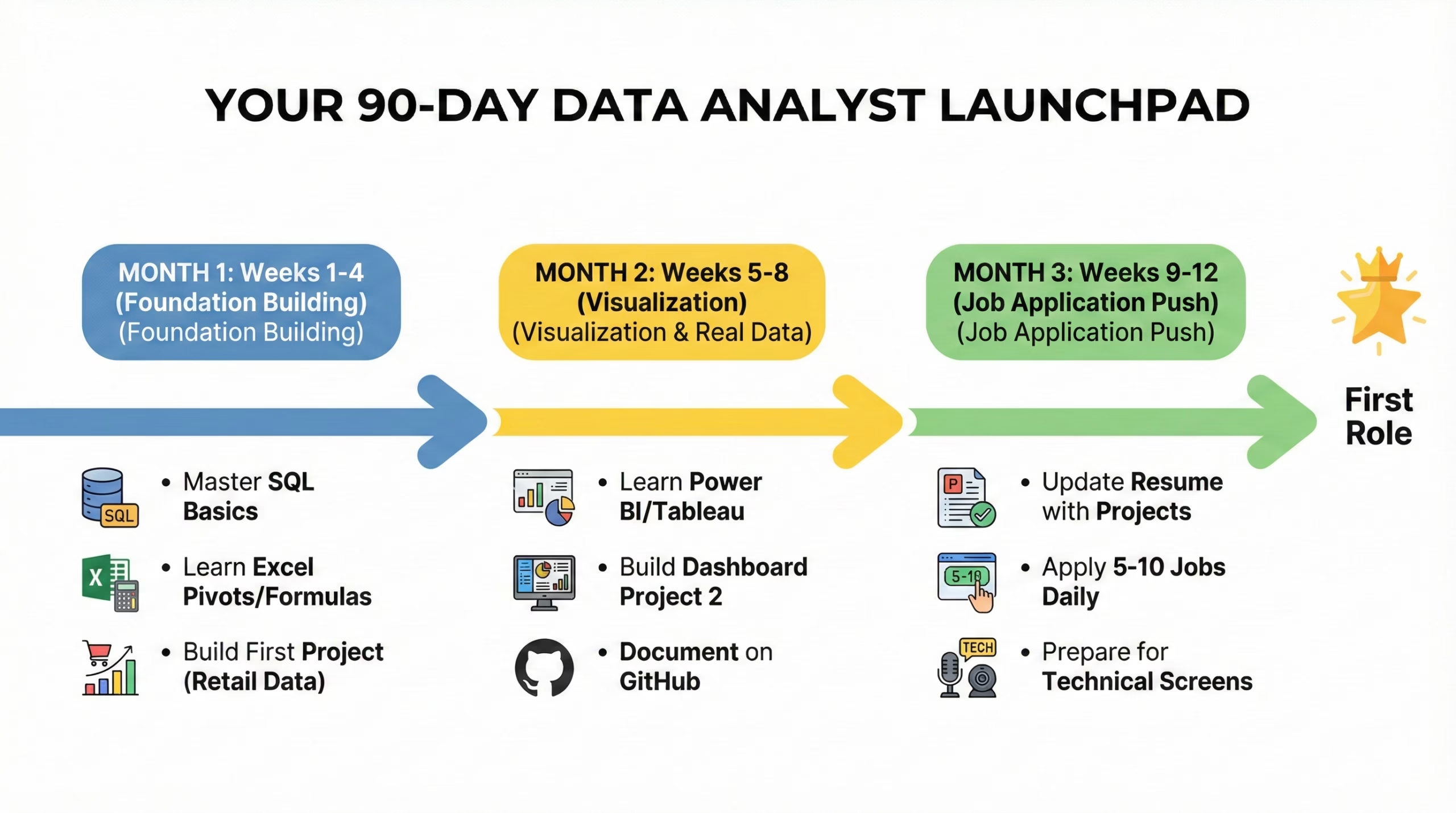
Weeks 1-4: Foundation Building
Choose and complete one comprehensive SQL course (free options: Mode Analytics SQL Tutorial, W3Schools SQL, paid: Udemy “Complete SQL Bootcamp”)
Practice 50 SQL queries on platforms like HackerRank, LeetCode SQL, or StrataScratch
Complete one Excel course focusing on pivot tables, VLOOKUP, formulas
Build first project: Download a Kaggle dataset (e.g., retail sales data), analyze it using SQL and Excel, document findings
Weeks 5-8: Visualization and Real Data
Choose and learn Power BI (free through Microsoft Learn) or Tableau (public version free)
Build dashboard using your Kaggle dataset from weeks 1-4
Create second project: Find different domain data (if first was retail, try healthcare or finance), analyze and visualize
Document both projects on GitHub with clear README files explaining:
- Business problem you’re solving
- Data source and structure
- Analysis approach
- Key findings
- Visualizations/dashboards created
Weeks 9-12: Job Application Preparation
Update resume highlighting your 2 completed projects
Apply to 5-10 entry-level data analyst positions daily on Naukri, LinkedIn, Instahyre
Prepare for common interview questions:
- Explain your projects in detail
- Walk through your analysis process
- Discuss challenges you faced and how you solved them
- Prepare to take technical screening tests (SQL, Excel, sometimes Python)
Practice explaining technical concepts in simple business terms
Network with data analysts on LinkedIn—comment on posts, share your projects, engage genuinely
Ongoing Beyond 90 Days:
Build third and fourth projects (aim for 4-6 total before first job)
Consider adding Python (pandas) after securing first role—easier to learn while employed
Join communities (Reddit r/datascience, LinkedIn data analyst groups) for learning and job opportunities
Keep iterating on resume and applications based on feedback
Critical Resources:
Free learning platforms: Mode Analytics (SQL), Microsoft Learn (Power BI), Kaggle (datasets and practice)
Job boards: Naukri.com, LinkedIn Jobs, Instahire, AngelList (startups)
Interview prep: StrataScratch (SQL + case interviews), Glassdoor (company-specific interview experiences)
Salary research: Glassdoor India, AmbitionBox, Naukri salary calculator
Final Perspective:
The data analyst career in India offers solid middle-class income potential without requiring IIT pedigree or exceptional academic credentials. The path from ₹3.5 LPA to ₹12-15 LPA in 5-6 years is well-worn and achievable for disciplined learners.
You won’t get rich quickly. You won’t match software engineer compensation at top tech companies. But you’ll build stable career with clear progression, work on interesting problems, and earn comfortable salary that supports middle-class lifestyle in Indian metros.
The question isn’t whether the opportunity exists—it clearly does based on consistent hiring demand. The question is whether you’re willing to invest 6-12 months learning fundamentals, building genuine projects (not just completing courses), and persistently applying until you land that first role at ₹3.5-4.5 LPA.
Everything after that first job is about consistent improvement, strategic company switches, and avoiding the common stagnation mistakes that keep people stuck.
The opportunity is real. The work is demanding but manageable. The outcomes are predictable if you execute consistently.
The rest is up to you.
Updated February 2026 | Based on 10,839 Glassdoor salary submissions, 864 Indeed reports, 500+ analyzed job postings, and interviews with 25 working data analysts across Bangalore, Pune, and Hyderabad.
Discover more from Skill Upgrade Hub
Subscribe to get the latest posts sent to your email.


Leave a Reply
You must be logged in to post a comment.