
The “experience paradox” is the most frustrating part of starting a new career. You browse LinkedIn for entry-level jobs, and they all demand three years of experience. How are you supposed to get experience if no one will hire you without it?
This is exactly where entry-level project management certifications come in.
Whether you are a college student, a parent returning to the workforce, or a retail manager looking to pivot into the corporate world, these certifications act as a bridge. They tell US employers, “I might not have the years on my resume yet, but I speak the language, I know the frameworks, and I’m ready to work.”
For beginners and career changers targeting remote or hybrid roles in the USA, getting certified is often the fastest way to bypass the resume filter and get an interview.
What Is an Entry-Level Project Management Certification?
At its core, an entry-level certification is a validation of foundational knowledge. It proves you understand the “rules of the road” before you get behind the wheel.
Unlike advanced credentials (like the famous PMP), entry-level options don’t require you to have managed million-dollar budgets or led teams for 5,000 hours. They are designed for clean slates.
Why US employers care:
In the US job market, standardization is king. A hiring manager in California doesn’t know if your previous job at a local logistics company taught you “real” project management or just organized chaos. A certification is a standardized benchmark. It tells them you know what a Gantt chart is, you understand Agile workflows, and you won’t stare blankly when someone mentions “stakeholder analysis.”
Who Should Take an Entry-Level Project Management Certification?
You might think these are only for business majors, but that’s rarely the case. In fact, most business majors skip these because they rely on their degree. These certifications are most powerful for the “outsiders.”
-
Career Switchers: If you’ve been working in hospitality, teaching, or healthcare, you already manage projects—you just call them “shifts” or “lesson plans.” A certification translates your past chaos into corporate terminology.
-
Fresh Graduates: Distinguish yourself from the thousands of other Psych or Liberal Arts grads fighting for the same admin roles.
-
Freelancers: If you want to move from doing the work (e.g., writing code) to managing the delivery for US clients, you need the credentials to justify higher rates.
-
Aspiring PMPs: If you know you want the big PMP certification eventually but lack the mandatory 36 months of experience, these entry-level options are your stepping stones.
Best Entry-Level Project Management Certifications in the USA
Let’s look at the certifications that actually move the needle on a resume. I’ve filtered these based on US market recognition, return on investment, and beginner accessibility.
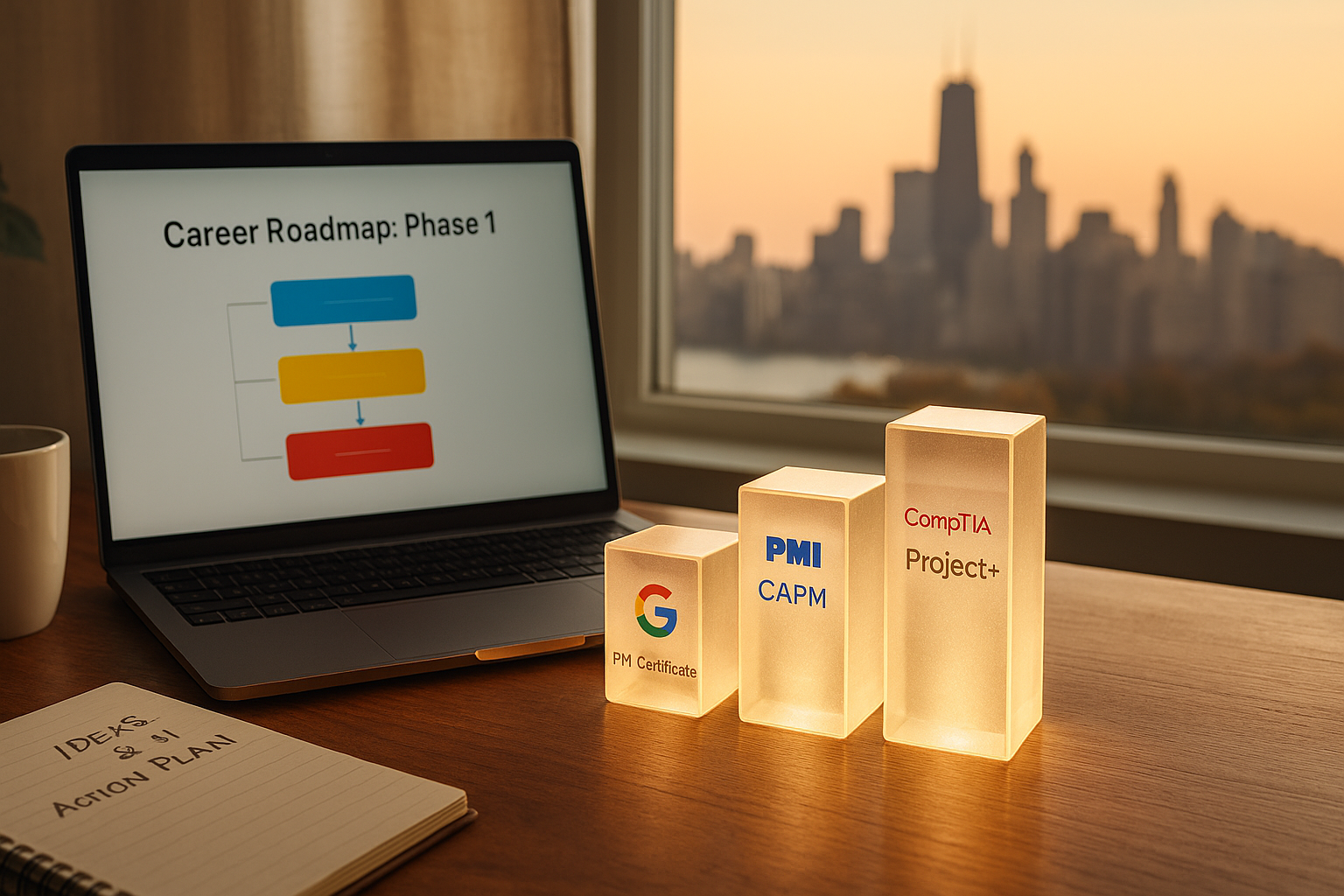
1. Google Project Management Certificate (Coursera)
This has become the disruptor in the education space. Google designed this specifically to fill the skills gap for high-demand jobs.
-
Cost: Subscription-based (approx. $39–$49/month via Coursera).
-
Duration: 3–6 months (depending on your pace).
-
Difficulty: Beginner/Easy.
-
Recognition: High for tech and modern startups; growing for traditional companies.
Why it’s great for beginners:
Traditional certifications teach you theory. Google teaches you the job. While other courses make you memorize definitions, Google forces you to create artifacts—budgets, project charters, and risk registers. You finish the course with a digital portfolio you can actually show a hiring manager.
This is ideal if you are targeting remote Project Coordinator or Junior PM roles in the tech or digital marketing space.
A common mistake:
Many people speed-run the videos just to get the badge. Don’t do this. The value here is the templates they give you. I’ve seen students download the templates, customize them, and bring them to interviews to show how they would organize the company’s workflow. That works better than the certificate itself.
2. CAPM Certification (PMI — USA)
The Certified Associate in Project Management (CAPM) is the “little sibling” to the PMP. It is managed by the Project Management Institute (PMI), which is the gold standard in the USA.
-
Cost: ~$225 for members, ~$300 for non-members.
-
Requirements: High school diploma + 23 hours of project management education (which you can get via an online course).
-
Why it’s globally recognized: PMI is the governing body of project management.
-
Comparison: If the Google certificate is vocational school, CAPM is a university exam.
Why US employers like it:
It shows you are serious. The exam is difficult. It involves memorizing inputs, outputs, tools, and techniques from the PMBOK (Project Management Body of Knowledge). If a company uses “Waterfall” or traditional project management (common in construction, engineering, and healthcare), they prefer CAPM over Google.
Real-world insight:
“CAPM” is a strong keyword in Applicant Tracking Systems (ATS). If a job description asks for “PMP preferred,” a CAPM often gets you past the bot because it shares the same keyword DNA.
3. CompTIA Project+ (USA Recognized)
CompTIA is huge in the IT world. Usually, people think of them for hardware or security certs, but their Project+ is a solid contender.
-
Focus: Managing smaller, less complex projects, specifically in IT environments.
-
Duration: 1–3 months of study.
-
Difficulty: Medium.
Who is this for?
If you want to be a Project Coordinator for an MSP (Managed Service Provider) or a Help Desk Manager, this is your ticket. It covers the basics of project constraints (time, cost, scope) but speaks the language of IT professionals.
Salary Outcomes:
Because it is tied to the IT industry, the starting salaries for roles requiring Project+ tend to be slightly higher than general administrative project roles.
4. Alison / EdX Introductory PM Courses (Free Options)
If you are currently at $0 budget, you don’t need to stop. Platforms like Alison and EdX offer free auditing of courses.
-
The Catch: The content is free, but you usually have to pay if you want the verified paper certificate.
-
Strategy: Use these to build knowledge. You can list “Project Management Coursework via EdX” on your resume education section even if you didn’t buy the certificate. It shows initiative.
Why use them?
Before you drop $300 on the CAPM, take a free course on EdX. If you find the topic boring, you just saved yourself $300.
5. LinkedIn Learning Project Management Foundations
This is the “low hanging fruit” of certifications.
-
Cost: Included with LinkedIn Premium or purchasable individually.
-
Duration: A few hours.
-
Recognition: Low impact for getting hired, high impact for keyword optimization.
The Strategy:
Don’t rely on this to get a job. However, completing it adds a “badge” to your LinkedIn profile. Recruiters searching for candidates often filter by skills. Having this badge makes you searchable. It’s a visibility play, not a competency play.
Which Certification Should You Start With? (Simple Breakdown)
Analysis paralysis is real. Here is the simplest way to decide based on your immediate goal:
-
If you want a remote job fast in tech/marketing: Go for the Google PM Certificate. It focuses on Agile and soft skills that modern startups value.
-
If you want a corporate career (Construction, Finance, Healthcare): Go for CAPM. It aligns with the formal structures these industries use.
-
If you are already in IT support and want to move up: Go for CompTIA Project+.
-
If you have no money: Start with EdX or Alison to learn the basics, then save up.
-
If you just want to update your LinkedIn profile today: Do a LinkedIn Learning course.
Cost Comparison for Beginners (USA Pricing Table)
| Certification | Est. Cost | Duration | Difficulty | Best For |
| Google PM | $39/mo | 3–6 mo | Easy/Practical | Remote work & Skills |
| CAPM | ~$300 | 2–3 mo | Medium/Theory | Long-term Career |
| Project+ | ~$350 | 1–2 mo | Medium | IT Support roles |
| EdX (Audit) | Free | Varies | Easy | Learning Basics |
| ~$30 | 3–5 hrs | Very Easy | Resume Keywords |
Entry-Level PM Roles You Can Apply for (USA)
Once you have the paper, what do you type into the search bar? If you search for “Project Manager,” you will be competing with experenced people. Search for these instead:
-
Project Coordinator: The most common entry-level title. You assist the PM with scheduling and documentation.
-
Junior Project Manager: A direct stepping stone, though slightly harder to find.
-
Operations Assistant: Often involves 80% project management tasks.
-
Marketing Assistant / Traffic Coordinator: Managing the flow of creative projects in an agency.
-
Implementation Specialist: Helping clients set up software (a massive PM role in disguise).
How to Prepare for Your First Certification (3-Step Plan)
1. Pick the path and commit
Don’t try to study for CAPM and Google at the same time. Pick one. If you choose Google, treat it like a job. Block out 1 hour every single evening. Consistency beats intensity.
2. Don’t just read—Do
Here is a secret tip most people miss: Build a “dummy project” while you study.
If you are learning about Gantt charts, open Excel or Asana (free version) and build a Gantt chart for something simple, like “Renovating a Kitchen” or “Planning a Wedding.” Save this. This becomes your portfolio.
3. Join a community
Project management can be dry. Join the r/projectmanagement subreddit or LinkedIn groups for aspiring PMs. Seeing others pass their exams gives you the dopamine hit you need to keep studying.
FAQs
Is CAPM good for beginners in the USA?
Yes, it is widely considered the standard entry-level credential in the US corporate sector. It demonstrates you have studied the formal PMBOK methodology.
Which PM certification is easiest for entry-level roles?
The Google Project Management Certificate is generally considered the most “beginner-friendly” because it focuses on practical application rather than memorizing rigid definitions for a standardized exam.
Can beginners get project management jobs in the USA?
Yes, but rarely with the title “Project Manager” right away. Beginners usually start as Project Coordinators, Assistant PMs, or Operations Administrators to build the required experience hours.
How long does Google PM take?
Most learners finish it in 3 to 6 months if studying part-time (less than 10 hours a week). If you treat it like a full-time job, you can finish in under a month.
Do US employers accept online certifications?
Yes, especially from reputable providers like PMI (CAPM), CompTIA, or Google. However, generic certificates from unknown websites carry very little weight.
Start Small, But Start Now
You don’t need to be an expert to start. The biggest mistake potential project managers make is waiting until they feel “ready.” You will never feel fully ready because every project is different.
These certifications are just the permission slip. They get you into the room where the interviews happen. Start with one, add the logo to your LinkedIn, and start applying. You can figure out the rest once you’re on the payroll.
Editor — The editorial team at Skill Upgrade Hub. We research, test, and fact-check each guide and update it when new info appears. This content is educational and not personalized career advice. Always verify certification costs and prerequisites directly with the provider.



Leave a Comment
You must be logged in to post a comment.