Let’s be honest: in 2025, skills have a shorter shelf life than a carton of milk. The old path of getting one degree and coasting for 40 years is gone. To get ahead—or just to keep up—you have to be learning all the time.
That’s where platforms like Coursera Plus come in. It promises an “all-you-can-learn” buffet: for one subscription fee, you get unlimited access to thousands of courses, projects, and professional certificates from top universities and companies like Google and IBM. The pitch is tempting. After all, 77% of learners on the platform report real career benefits, like landing a new job or getting a promotion.
But is the all-access pass worth the price tag? This review cuts through the hype to give you a straight answer. We’ll break down the cost, what’s included (and what’s not), the major pros, and the frustrating cons. By the end, you’ll know if Coursera Plus is the right move for you in 2025.

How Much Does Coursera Plus Cost in 2025?
First, let’s talk money. Coursera Plus has two main pricing tiers, and your choice depends on your commitment level.
- Monthly Plan: $59 per month. Great for flexibility, as you can cancel anytime.
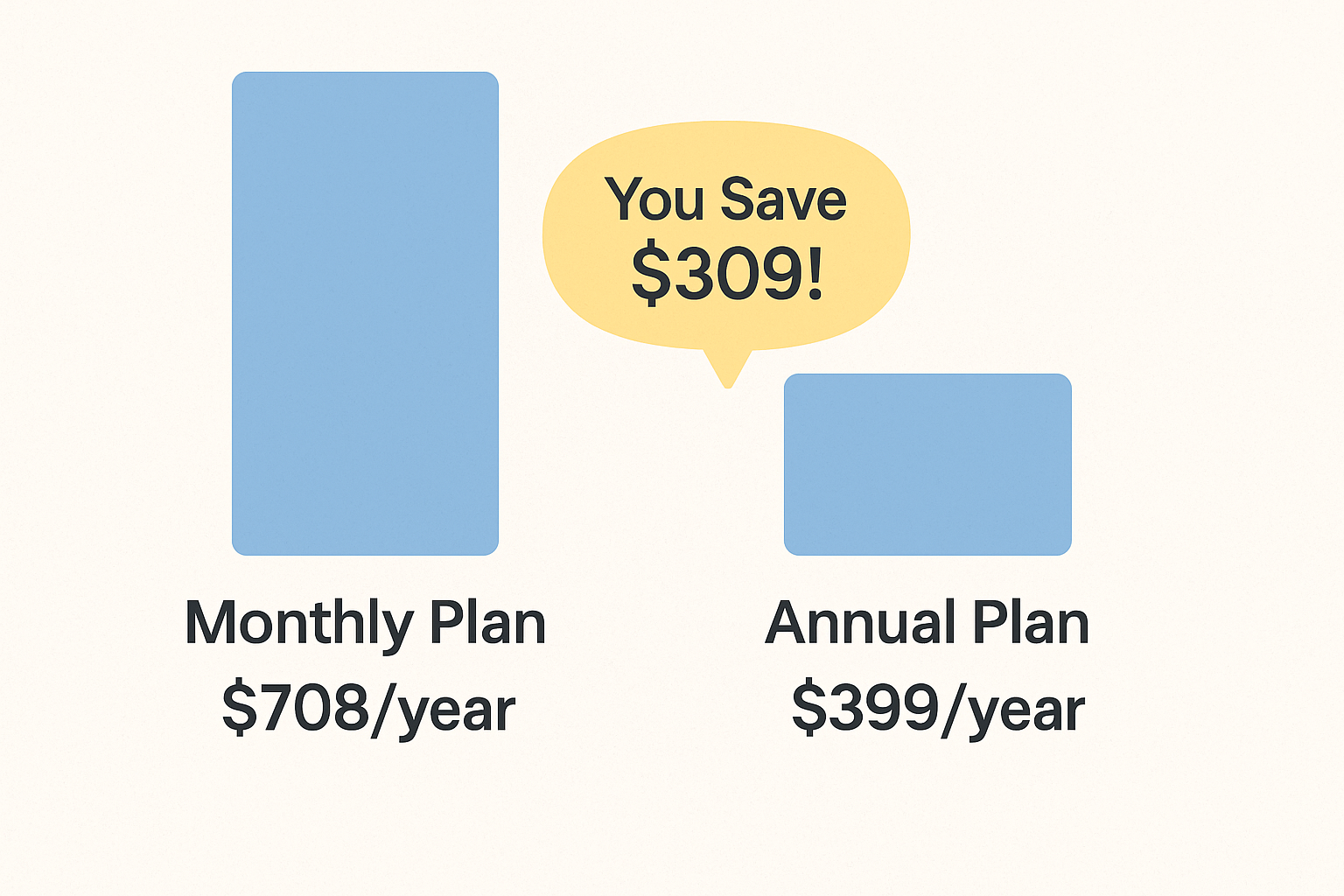
- Annual Plan: $399 per year. You pay upfront, but the savings are significant.
Do the math, and the annual plan is a no-brainer for long-term learners. A monthly subscription for a full year adds up to $708. By choosing the annual plan, you save $309—a 44% discount. This is designed to reward people who are serious about learning for more than a few months.
The real value becomes clear when you compare it to buying courses one by one. Most Professional Certificates on Coursera cost between $39 and $79 per month on their own. Take the popular Google Data Analytics Professional Certificate. It typically takes about six months to finish. At $49 a month, that single certificate would cost you around $294.
This brings us to a simple rule of thumb: if you plan to take even one major Professional Certificate and a couple of shorter courses in a year, the $399 annual plan is almost always cheaper. If you’re aiming for multiple certificates, the savings are huge.
To make the decision easier, Coursera offers a safety net for each plan:
- The monthly plan has a 7-day free trial.
- The annual plan comes with a 14-day money-back guarantee.
Just be sure to cancel before your trial ends if you’re not sold, because payments made after the trial are non-refundable. Also, keep an eye out for promotions. Coursera often offers discounts of 20-40% on the annual plan for new subscribers, which can drop the price to as low as $240.
What Do You Actually Get with Coursera Plus?
The biggest draw of Coursera Plus is the sheer volume of content. You get unlimited access to over 10,000 learning programs, which is more than 90% of everything on Coursera. The courses are taught by instructors from over 350 top-tier universities and companies, so the quality is generally high.
Here’s a breakdown of what’s inside:
- Courses: Thousands of individual classes on everything from Python and data science to art history and psychology.
- Guided Projects: Short, 1-2 hour projects that teach you a specific skill, like building a report in PowerBI or using Microsoft Azure.
- Specializations: A series of courses that build deep knowledge in one area, like the University of Michigan’s famous “Python for Everybody” Specialization.
- Professional Certificates: For most people, this is the main event. These are job-training programs designed by industry leaders to get you ready for a specific role.
The real power of Coursera Plus isn’t just the quantity of courses, but the quality of the brands behind them. Your subscription is a ticket to some of the most recognized entry-level certifications in tech.
Key Partners and Popular Programs Included:
- Industry Giants: Get skills directly from Google, Meta, IBM, Microsoft, AWS, Adobe, and Salesforce.
- Top Universities: Learn from professors at Stanford, Yale, University of Michigan, University of Pennsylvania, and Johns Hopkins.
- Flagship Certificates: Many of the platform’s most popular programs are included, such as:
- Google Data Analytics Professional Certificate
- Google Project Management Professional Certificate
- Google UX Design Professional Certificate
- Google IT Support Professional Certificate
- IBM Data Science Professional Certificate
- Meta Front-End Developer Professional Certificate
For many, the ability to earn two or three of these high-value certificates for a single annual fee is what makes the subscription worth it.
Where Coursera Plus Shines
So, what are the biggest advantages of Coursera Plus? It really comes down to three things.
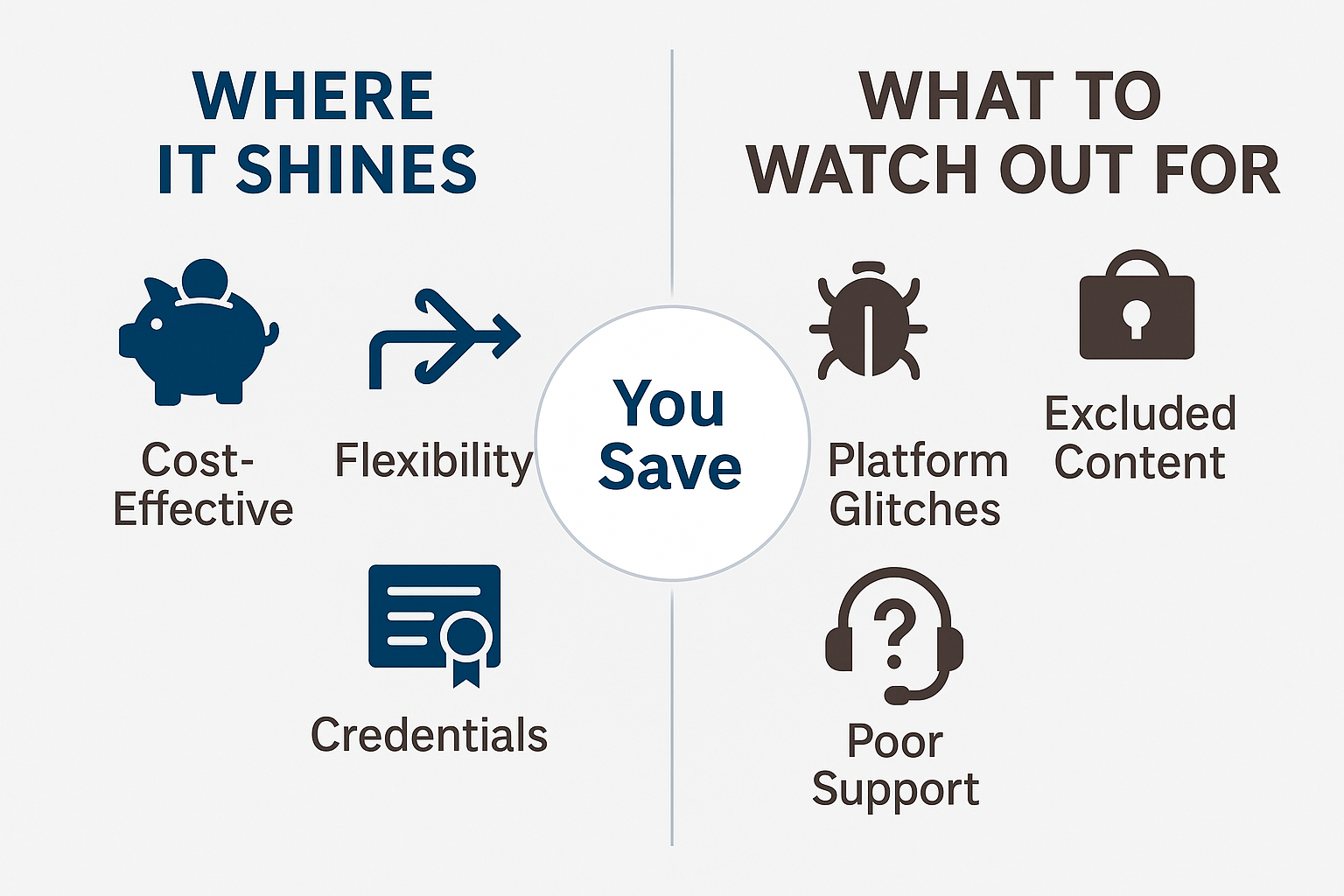
First, it saves you a ton of money if you’re a serious learner. If you plan to take more than one big certificate or several smaller courses in a year, the annual plan is a fantastic deal. You get unlimited courses and unlimited certificates for one flat fee, which encourages you to keep learning without worrying about the cost of each program.
Second, you can explore different career paths without financial risk. Ever started a course, realized you hated it, and felt stuck because you already paid? Coursera Plus solves that. You can start the Google UX Design certificate, decide it’s not for you after a few weeks, and immediately switch to the IBM Data Science certificate without paying a dime more. It’s a great way to test-drive different careers.
Third, it’s perfect for building a strong portfolio of credentials. If you’re trying to make a major career change, you can “stack” certificates to build a powerful skill set. For example, you could earn the Google Project Management certificate, then the IBM Cybersecurity Analyst certificate, and top it off with a Specialization in AI from a top university. Assembling that kind of resume on a pay-per-course basis would be incredibly expensive.
The Downsides: What to Watch Out For
No platform is perfect, and Coursera Plus has some significant drawbacks you should know about before you subscribe. The biggest issue is often the gap between the excellent course content and the frustrating platform experience.
Not Everything Is Included
Coursera Plus includes over 90% of the catalog, but the 10% it excludes contains some of the most prestigious and expensive programs.
Here’s what you don’t get:
- Degrees and MasterTrack Certificates: Full online degrees and graduate-level MasterTrack programs are not part of the deal. These cost thousands of dollars on their own.
- Courses from Certain Partners: Some universities and companies simply haven’t opted into the Plus program. Users have noted that some content from partners like Stanford, Princeton, and DeepLearning.AI is often excluded.
Pro Tip: Before you buy, go to the page of any course you absolutely must take and look for the “Included with Coursera Plus” badge to make sure it’s covered.
Great Courses, Clunky Platform
A common complaint among users is that while the courses themselves are great, the platform can be a nightmare.
- Bugs and Glitches: Users frequently report website crashes, assignments that won’t submit or grade correctly, and course progress that mysteriously vanishes.
- Customer Support Black Hole: If you run into a problem, good luck getting help. Many users complain about being stuck in loops with AI chatbots and waiting days for a response to support tickets—which is especially frustrating if you’re on a deadline or have a billing issue.
- Inconsistent Quality: While the Google courses are widely praised, others are not. Some users have criticized certain IBM programs for using grating AI-generated voices, having poor audio, or featuring outdated material.
- The Peer-Review Problem: Many assignments are graded by other students, which can be a huge bottleneck. You might wait days for a review, only to get unhelpful feedback or a troll who gives you a zero for no reason, completely halting your progress.
You have to be prepared to weigh these risks. You might be paying for world-class content that you can’t access smoothly because of issues with the platform itself.
Is Coursera Plus Right for You?
Coursera Plus is a fantastic tool for some people and a waste of money for others. See if you fit into one of these profiles.
You Should Get It If…
- You’re a Career Switcher: If you’re trying to break into a new field, Coursera Plus is a goldmine. You can take multiple Professional Certificates back-to-back to build a solid foundation of skills—like starting with Google IT Support and then moving on to Google Cybersecurity—for one fixed price.
- You’re a Lifelong Learner: If you’re already in a good career but want to keep your skills sharp, the subscription is perfect. You can dip into different courses throughout the year to learn about data analytics, AI, or project management as needed.
- You’re a Curious Explorer: Do you want to learn about psychology one month, Python the next, and then modern art? Coursera Plus lets you satisfy your curiosity across dozens of fields without having to pay for each individual course.
You Should Probably Skip It If…
- You Only Need One Course: If you just need to complete a single program and can finish it in a few months, it’s cheaper to pay for that one course’s monthly subscription instead of buying the annual Plus plan.
Coursera Plus vs. The Competition (Udemy, edX, and More)
Coursera Plus has a unique spot in the online learning world. It’s not a free-for-all marketplace like Udemy, and it’s more flexible than the pay-per-course model of edX. It’s the best option for subscription-based access to university and corporate credentials.
- vs. Udemy: Udemy is a huge marketplace of courses taught by individual instructors. It’s great for practical skills, but it doesn’t have the university and big-brand recognition that Coursera offers.
- vs. edX: Founded by Harvard and MIT, edX is very academic but doesn’t have an all-access subscription for individuals. You have to pay for each course, which can get expensive quickly.
- vs. Skillshare: Skillshare is cheaper and focuses on short, project-based classes for creatives (design, photography, etc.). It’s not designed for earning career-changing certificates.
What Real Users Are Saying
Online reviews tell a consistent story: people love the courses but get frustrated by the platform.
The Good
Many users rave about the value. One learner mentioned taking Python courses from Google, IBM, and a university all under one subscription, giving them a much deeper understanding than a single bootcamp could. Others point to the high-quality Google certificates as a major plus, saying they are well-structured and genuinely helpful for their careers.
The Bad
The negative reviews almost always focus on the user experience. One detailed review of an IBM certificate described a buggy coding environment, an “annoying” AI voice for all the lectures, and a curriculum that was way too advanced for beginners.
Billing and support are also huge sore spots. Users report being double-charged and denied refunds, or being stuck with a grading bug for weeks with no response from support—sometimes right up until their 14-day refund window closes. Finally, many admit that without hard deadlines, it takes a lot of self-discipline to actually finish the courses.
Your Questions Answered: Coursera Plus FAQs
Q1: Do I lose my certificates if I cancel my subscription?
Nope! Any certificate you earn is yours to keep forever. It will stay in your Coursera account, and you can add it to your LinkedIn or resume even after your subscription ends.
Q2: What happens to my course progress if I cancel?
Your progress is saved. If you cancel mid-course, you’ll lose access to graded assignments. But if you re-subscribe later, you can pick up right where you left off.
Q3: Is there a limit on how many certificates I can earn?
No. You can enroll in as many courses as you want and earn as many certificates as you can complete while your subscription is active.
Q4: How do I know for sure if a course is included?
Go to the course’s main page. If it’s part of the subscription, you’ll see a clear badge that says, “Included with Coursera Plus”.
Q5: What’s the refund policy?
It’s different for each plan. The annual plan has a 14-day money-back guarantee. The monthly plan has a 7-day free trial, but once you’re charged after the trial, there are no refunds.
The Bottom Line: Should You Get Coursera Plus in 2025?
So, what’s the final call? For the right person, Coursera Plus is one of the best deals in online education today.
The trade-off is simple: you get incredible access to a world-class catalog of courses that can genuinely change your career. But you have to be willing to put up with a platform that can be buggy and has lackluster customer support.
Coursera Plus is a great investment for: Career changers and dedicated upskillers. If you know you’re going to complete two or more major programs in a year, the $399 annual plan will save you a lot of money. The math just works.
Coursera Plus is probably not worth it for: The casual learner who only needs one specific course. It’s also not for you if you have little patience for technical glitches or poor customer service.
To make your final decision, ask yourself these four questions:
- How ambitious am I? Do I plan to complete multiple courses or just one? (If more than one, lean yes).
- Is my course included? Have I checked the course page to make sure it’s part of the Plus catalog?
- Am I self-motivated? Can I stay on track without someone pushing me?
- Am I patient? Am I prepared to deal with potential platform bugs on my own?
If you answered “yes” to these, then Coursera Plus is a powerful and affordable way to hit your career goals in 2025.


Leave a Comment
You must be logged in to post a comment.